
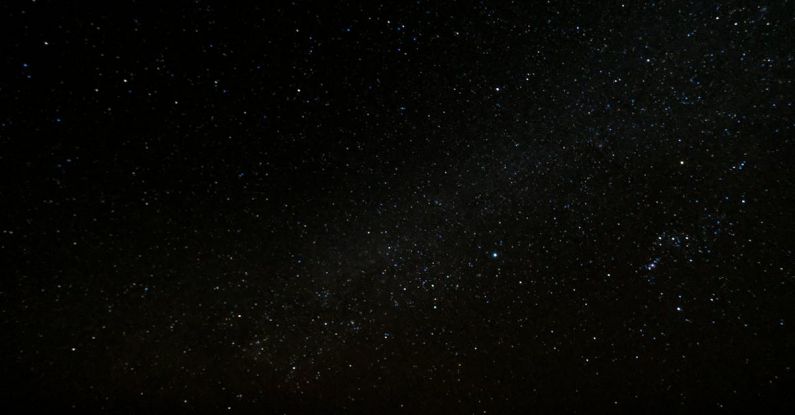
The art of navigating using the stars has been a skill passed down through generations, allowing sailors, hikers, and adventurers to find their way across vast oceans and uncharted territories. While modern technology has provided us with GPS systems and compasses, understanding how to navigate using the stars remains a valuable skill for those who venture off the beaten path. In this guide, we will explore the basics of celestial navigation and how you can use the stars to find your way.
Understanding the Night Sky
To navigate using the stars, you first need to familiarize yourself with the night sky. Look for the North Star, also known as Polaris, which remains fixed in the sky while other stars appear to rotate around it. Polaris is located very close to the north celestial pole, making it a reliable reference point for navigation in the northern hemisphere. In the southern hemisphere, there is no equivalent star, but the Southern Cross can serve as a guide.
Identifying Constellations
Constellations are groups of stars that form recognizable patterns in the sky. Learning to identify key constellations can help you orient yourself and determine your direction. For example, the Big Dipper, part of the Ursa Major constellation, is a prominent constellation in the northern hemisphere and can be used to find Polaris. By tracing an imaginary line from the two outer stars of the Big Dipper, you can locate the North Star.
Using Stellar Navigation
One of the simplest methods of using the stars for navigation is by employing the technique of stellar navigation. This involves identifying specific stars or constellations and using their positions to determine your direction. By observing the angle of a star above the horizon, you can estimate your latitude. For example, if you are at a latitude of 40 degrees north, Polaris will appear 40 degrees above the northern horizon.
Navigating by Star Patterns
Another method of navigating using the stars is by recognizing star patterns that can guide you in a particular direction. For instance, the constellation Orion is easily recognizable with its distinctive belt of three stars. By drawing an imaginary line through the belt of Orion and extending it, you can find the bright star Sirius, which lies to the southeast. Using star patterns in this way can help you navigate based on cardinal directions.
Utilizing Star Charts
For more advanced navigational purposes, star charts can be a valuable tool for identifying stars and constellations in the night sky. Star charts provide a detailed map of the celestial sphere, allowing you to pinpoint specific stars and track their movements throughout the night. By using a star chart in conjunction with your observations, you can enhance your navigational skills and accurately determine your position.
Practicing Celestial Navigation
Like any skill, navigating using the stars requires practice and experience to master. Regularly observing the night sky, identifying constellations, and practicing different navigation techniques can help you become more proficient in celestial navigation. Consider taking a stargazing course or joining a local astronomy club to learn from experienced navigators and improve your skills.
Navigating with Confidence
By honing your skills in navigating using the stars, you can embark on adventures with confidence, knowing that you have the knowledge to find your way in the wilderness. Whether you are sailing across oceans, hiking through remote landscapes, or simply exploring the night sky, the ability to navigate by the stars is a timeless skill that connects us to the wonders of the universe. So next time you find yourself under the vast expanse of the night sky, look up, and let the stars be your guide.